Steel and Sweat: A Beginner’s Guide to Strength Training at Metro Forge Fitness
Walking into a gym for the first time can feel like stepping onto a movie set where everyone else already knows the script. At Metro Forge Fitness, the goal is to rewrite that script so strength training feels clear, accessible, and—yes—actually enjoyable.
This guide will walk you through the basics: what strength training is, why it matters, how to get started at Metro Forge Fitness, and how to build a routine you can stick with.
What Strength Training Actually Is
Strength training is any exercise that makes your muscles work against resistance. That resistance can be:
- Your own bodyweight (push-ups, squats, planks)
- Free weights (dumbbells, barbells, kettlebells)
- Machines and cables
- Resistance bands
The goal isn’t just to “lift heavy.” It’s to progressively challenge your muscles so they adapt—getting stronger, more resilient, and more efficient over time.
Why Strength Training Matters (Even If You’re Not Chasing a Six-Pack)
You don’t need to want huge muscles to benefit from strength training. It impacts almost every part of your life:
- More strength for real life
Carry groceries, climb stairs, move furniture, play with kids—without feeling wrecked afterward.
- Better posture and less pain
Stronger back, core, and glutes mean less strain on your joints and spine.
- Faster metabolism
Muscle is metabolically active tissue. More lean muscle = your body burns more calories even at rest.
- Stronger bones and joints
Resistance training helps maintain and even increase bone density, reducing injury risk over time.
- Better mood and confidence
Strength training can reduce anxiety and depression symptoms, and the sense of “I can do this now” carries over into other areas of life.
The Metro Forge Fitness Approach
Every gym has its personality. Metro Forge Fitness is built around three ideas that matter for beginners:
- Structured, not chaotic
Instead of wandering from machine to machine, you’ll follow clear plans and programs.
- Form first, weight second
Coaches prioritize technique and safety over ego lifting.
- Progress you can see and track
You’ll know what you did last week and what you’re aiming for this week.
This turns the gym from something intimidating into something measurable and manageable.
Getting Started: Your First Visit
Step 1: Orientation and Assessment
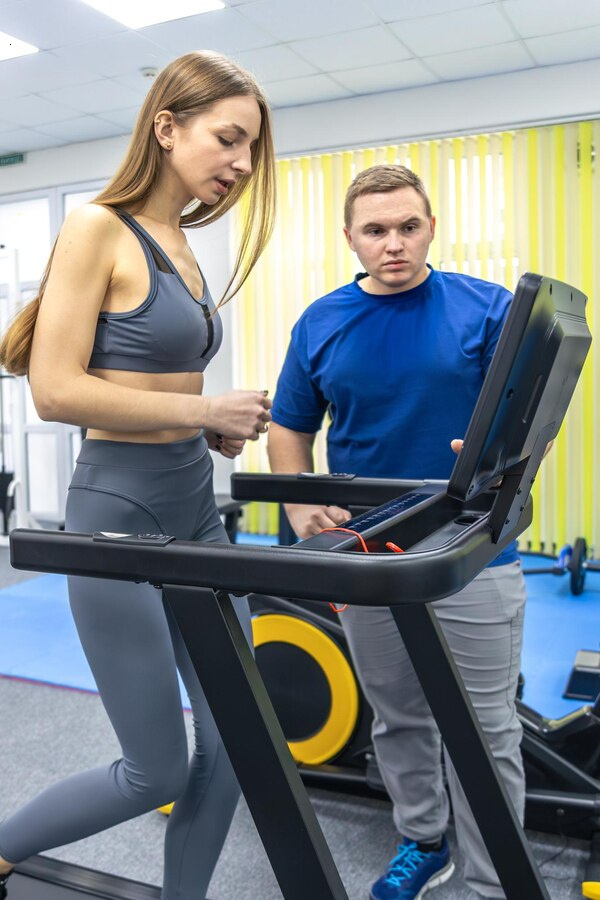
Most beginners at Metro Forge Fitness start with a simple intake or intro session. Expect:
- Basic questions: training history, injuries, goals
- Movement checks: bodyweight squats, hip hinges, shoulder range of motion
- A walk-through of key equipment: racks, benches, dumbbells, cable machines
The goal isn’t to test how strong you are; it’s to see how you move so your program starts at the right level.
Step 2: Learning the Core Movements
Strength training is built on a handful of foundational patterns. At Metro Forge, your early sessions will focus on these:
- Squat – bending at hips and knees (goblet squat, bodyweight squat)
- Hinge – pushing hips back with minimal knee bend (Romanian deadlift, hip hinge drills)
- Push – upper body pushing (push-ups, bench press, dumbbell press)
- Pull – upper body pulling (rows, assisted pull-ups, pulldowns)
- Carry – loaded walking (farmer’s carries, suitcase carries)
- Brace – core stability (planks, dead bugs, anti-rotation holds)
Once you understand these patterns, every other exercise is just a variation.
How Often Should You Train?
For beginners, consistency beats intensity. A realistic starting point:
- 2–3 strength sessions per week
- At least 1 day of rest between full-body sessions
Example:
- Monday – Strength training
- Wednesday – Strength training
- Friday or Saturday – Optional third strength day or light cardio/mobility
Even two focused sessions per week at Metro Forge Fitness are enough to build noticeable strength over a few months.
Building a Simple Beginner Routine
Here’s what a full-body beginner session at Metro Forge Fitness might look like. This is an example, not a prescription; a coach can adjust it to you.
Warm-Up (5–10 minutes)
- 3–5 minutes light cardio (bike, rower, treadmill walk)
- Dynamic mobility: leg swings, arm circles, hip circles
- 1–2 activation drills: glute bridges, band pull-aparts
Main Lifts (30–40 minutes)
Perform 2–3 sets of 8–12 reps for each exercise unless otherwise guided.
- Squat pattern
- Goblet Squat with a dumbbell or kettlebell
- Focus: steady tempo, knees tracking over toes, chest up
- Hinge pattern
- Romanian Deadlift with dumbbells
- Focus: hips back, slight knee bend, neutral spine, feel it in hamstrings and glutes
- Horizontal Push
- Dumbbell Bench Press or Push-Ups (incline if needed)
- Focus: controlled lowering, shoulder blades pulled slightly back
- Horizontal Pull
- Seated Cable Row or Dumbbell Row
- Focus: pulling with back, not just arms; squeeze shoulder blades
- Core / Brace
- Dead Bug, Plank, or Pallof Press
- Focus: control and breathing, not just holding on for dear life
Finisher / Conditioning (optional, 5–10 minutes)
Short, controlled bursts rather than all-out suffering, for example:
- 30 seconds on / 30 seconds off: bike, rower, or sled pushes
Cool-Down (5 minutes)
- Easy walking or light cardio
- Simple stretching: hamstrings, hip flexors, chest, lats
How to Pick the Right Weight
At Metro Forge Fitness, you won’t be left guessing. But as a guideline:
- The last 2–3 reps of a set should feel challenging
- You should still be able to keep good form
- You should not feel pain in your joints or lower back
If you feel like you could do 8–10 more reps at the end of a set, the weight is too light.
If your form falls apart or you’re holding your breath uncontrollably by rep 4, it’s too heavy.
Form, Safety, and Asking for Help
Proper technique is the difference between getting stronger and getting sidelined. At Metro Forge Fitness:
- Coaches can spot you on major lifts like squats and presses
- They’ll help you adjust:
- Foot stance
- Grip width
- Bench and seat height
- Bar path and range of motion
Your job as a beginner is to:
- Speak up if something feels “wrong,” not just hard
- Ask for a demo as many times as you need
- Start conservative—there is no penalty for lifting less and lifting well
Progression: How You Actually Get Stronger
Progress doesn’t happen randomly. The gym programs at Metro Forge Fitness usually build in:
- Progressive overload – gradually:
- Adding a bit of weight
- Adding a rep or set
- Slowing the tempo for more control
- Deloads or lighter weeks – to allow recovery and avoid burnout
- Program blocks – 4–8 week phases focused on specific goals (basic strength, muscle building, endurance)
Your progress can be tracked through:
- Weights lifted (for example, your squat going from 20 kg to 40 kg)
- Reps completed at a given weight
- Better form and range of motion
- How you feel outside the gym (energy, confidence, fewer aches)
Common Beginner Fears (And Why They’re Overblown)
“I don’t want to get bulky.”
Gaining large amounts of muscle requires years of specific training, eating, and recovery. Beginners typically gain strength, better shape, and more definition, not sudden bulk.
“Everyone will be watching me.”
Most people are focused on their own sets, their own phones, and their own mirrors. And at a place like Metro Forge Fitness, the culture is geared toward support, not judgment.
“I’m too weak / old / out of shape to start.”
Strength training is scalable. That’s the point. You can start with bodyweight, machines, and light dumbbells, and build from there—at any age and any fitness level.
Recovery: The Half of Training You Don’t See On Instagram
Strength gains happen when you recover from training, not during the session itself. To give your body what it needs:
- Sleep: Aim for 7–9 hours when possible
- Protein: Include a solid protein source at each meal (eggs, fish, poultry, meat, tofu, dairy, legumes)
- Hydration: Drink regularly throughout the day, not just at the gym
- Movement on rest days: Walking, light cycling, stretching to keep your body from stiffening up
Making Metro Forge Fitness Your Training Home
The equipment and programming matter, but what keeps people coming back is the environment. To get the most from Metro Forge Fitness:
- Show up at consistent times so the space and people become familiar
- Ask coaches to review your form regularly
- Keep a simple training log (weights, sets, reps, how it felt)
- Set short, clear goals (e.g., “3 push-ups from the floor” or “deadlift my bodyweight”)
Strength training is not about becoming someone else; it’s about upgrading what your current body can do. With a structured, beginner-friendly setup like Metro Forge Fitness, the path from “I have no idea what I’m doing” to “This is part of my life now” is much shorter than it looks from the outside.
Show up, learn the basics, and keep adding small improvements. The steel and sweat will take care of the rest.